Friday, April 12, 2013

Accessible Puzzle Design in Pushmo


Pushmo is a puzzle game released in late 2011 on the Nintendo 3DS. After the 3DS suffered without a great exclusive game for the better part of the year, Nintendo's Pushmo came on the scene and seemed to succeed on every front: it was charming and accessible, had a lower barrier to entry than most 3DS games (it could be downloaded straight from the eShop for only $7), and its gameplay  nicely demonstrated the system's 3D screen. On the recommendation of a friend, I picked up Pushmo last year and played it on my commute for several months. While it's not perfect, I found it contains some important lessons about design puzzle games for a broad audience

Pushmo does a few things extremely well to achieve broad appeal. It selectively borrows from platformers while keeping the player's focus entirely on puzzle-solving. Its more challenging puzzles start off simple and accessible to avoid scaring off the player. Lastly, Pushmo enables players to develop advanced strategies for completing puzzles, by providing visual checkpoints to help break a puzzle into its component pieces. These elements come together to ease casual players into the game and encourage some to play though and complete its most difficult puzzles.

A puzzle game, not a platformer.
Pushmo appears to benefit from being designed as a puzzle game first, and everything else second. On its surface, the game controls like a platformer - players run, jump, and grab blocks in 3D space. However the game smartly avoids becoming a platformer by placing all of the challenge in its puzzles, and removing any pportunity for the "platforming" to cause unnecessary friction.

Whenever the player accidentally falls or makes a bad move in Pushmo, they can rewind time to undo, and a reset button allows the player a fresh start whenever they'd like. The game prevents players from accidentally walking off of ledges by pausing Mallow at the edge of a block. It even prevents the player from accidentally landing on the "reset" button when jumping from the puzzle. These details often go overlooked in puzzle-platformers, but Pushmo's developers knew they wanted to test a player's mastery of puzzles, not their manual dexterity. Pushmo successfully encourages experimentation by making sure players are never punished by the controls.

The first step is always the hardest, except in Pushmo.
Puzzle games can often seem impenetrable to players, especially when they are just starting out. Consider, for example, a Sudoku puzzle in its starting state:


There are 459 potential starting moves (51 squares x 9 digits) in this puzzle, and an inexperienced player has no frame of reference for which ones to prioritize. Advanced Sudoku players know how to quickly sort this information and focus on just a few potential moves. They know that the first or last columns are good places to start, because each has only four empty spaces. That narrows down the number starting of moves to a manageable 16 (4 squares x 4 digits), and they can iterate through them, eliminating options as they go. All of a sudden, they're on their way to solving the puzzle.

Similarly, Pushmo starts by showing the player a large grid of blocks to manipulate. Like in Sudoku, players have to keep making moves until they reach the goal (solving the puzzle). In Pushmo, each block has 4 possible states - pushed all the way in, or pulled out into the foreground up to 3 times. The Pushmo puzzle below contains 25 pieces. An inexperienced player might feel overwhelmed by the 100 possible starting moves and nearly infinite combinations of moves that can follow them. Without some encouragement, the player might even turn the game off or start playing a less confusing game.


However, Pushmo is kind to its players and lets them dip their toes in the water before taking the  plunge. As it turns out, the first step in most Pushmo puzzles - even the advanced puzzles later in the game - is usually very easy, gravity limits the options. Mallow starts at the bottom of the puzzle, and can only manipulate blocks that exist at his current elevation. In the example above, that means there are only 3 blocks that can be involved in the player's first move. Already, we've narrowed things down from 100 moves to 12. Since Mallow can only jump high enough to climb the lower-left block, the first decision is an easy one. In this puzzle and many others, the player's decision tree for their first few moves is fairly linear, as in the first figure below.


Later in the puzzle, things will not be so easy. The graph of possible moves becomes much more complex and nonlinear, as in the second figure above, often requiring players to backtrack or manipulate the same block multiple times. However, the player's "momentum" has already picked up by this point, and the game has rewarded them with enough forward progress that they are less likely to get frustrated and quit. By starting each puzzle with a few simple moves and ramping up the difficulty later, Pushmo avoids overwhelming the player before they're having fun.

Careful observation and planning.
In Pushmo's advanced puzzles, things start getting hairy. Not only are the later levels bigger and more complex, but they introduce new elements like switches that pull every block of a certain color to the foreground, or ladders that act as portals to their twin elsewhere in the puzzle. These elements do more than add variety: they serve as visual checkpoints that the player can use to plan their strategy for completing the game's largest puzzles.


The puzzle above - one of the last in the game - is visually complex and contains many small, hard-to-reach blocks. There are also two pairs of ladders - stepping onto a red ladder teleports the player to the other red ladder as long as both blocks are pulled into the foreground. Finally, there are red an dark green switches, each of which will pull all blocks of that color to the foreground - helpful for blocks like the lizard's red tongue, which have no nearby footholds. Using all of these visual landmarks, the player can break the puzzle up into stages, as in the image below.


There are five stages to this puzzle, starting at the bottom and ending with the goal at the top. The player can mentally break the puzzle down into these stages by working their way backwards from the goal. To reach the goal, the player can use the blue ladder. For the blue ladder to work, the player needs the red blocks to be pulled out, so they need to hit the red switch, and so on. Players can recognize the "critical path" by following the placement of switches and ladders. Having these short-term goals helps make Pushmo's puzzles more feasible as they scale up, allowing the designers the freedom to create puzzles from larger, more complex images.

Every puzzle has multiple solutions.
These are the three elements of Pushmo's design that I feel gave it the biggest opportunity for success, by making the game more accessible while still containing many challenging puzzles. The game focused on puzzling, not platforming, and removed any unneeded friction. The puzzles start off easy and ramp up as the player moves through them, which helps get the player acclimated to each space without feeling overwhelmed. As the puzzles get larger, the game introduces new elements that help guide the player and turn large challenges into sets of smaller ones.

However, I suspect there may be those who disagree with my assessment. On the flip side of the coin, there are at least two good arguments to these points that I can think of (and there are probably many more):
  1. Pushmo gives the player the information necessary to form a plan and strategically work their way through the puzzle. Many "casual" puzzle games, however, employ the opposite strategy. Some of the most popular puzzle video games, such as Tetris and Bejeweled, make it relatively difficult to plan too far ahead. The player has a limited understanding of what the board will look like two turns from now, and even advanced players often make moves based on current information instead of looking forward. Often, but not always, these games have no "win" state - the challenge is to see how long you can "survive" or how many matches you can make. By using the "keep trying until you succeed" model, Pushmo avoids failing the player but also delays positive feedback to the player until they've completed the puzzle. There is no "partial credit." It's possible this is more alienating to casual players.
  2. Because the first few moves are usually fairly straightforward, every puzzle starts off the same way. It is very rare for there to be an alternate strategy at the beginning of a puzzle - the best move is usually to pull all of the bottom row all the way out. It's possible that Pushmo becomes less interesting for players as time goes on because this strategy doesn't evolve much even in the later stages.
Have you played Pushmo? Have you played its sequel, Crashmo, which I am yet to check out? Do you have examples of any of the above from other puzzle games? I would love to keep the conversation going in the comments.


Thursday, April 11, 2013

Catching Up

It has been over nine months since the last post was published on Thumbstruck! As my excuse, here's a quick update on what I've accomplished in nine months:


  • Completed 14 more games, including Rayman Origins, Pushmo, and The Walking Dead (all highly recommended). This brings my grand total to 42 games completed since I started tracking them (September 2010).
  • I proposed to the woman of my dreams, and against all odds, she said yes. We our planning our wedding and getting married later this year.
  • I helped launch a lot of new stuff at work. If you own a Windows 8 computer/tablet, there's a decent chance there's a game on your computer with my name in the credits. Hooray!
  • I helped run a game with Arkadium at the Come Out and Play festival on Governor's Island. The game is called Super Secret Spies, and despite the sneakiness, there are tons of photos online.
  • I attended Practice, a game design conference hosted by NYU Game Center, and heard talks from some truly remarkable people. No single event has reinvigorated my resolve to create great games more than this conference. If you're interested in hearing about any of the talks, let me know!
  • Got my first smartphone! I am now the proud owner of a Nexus 4 running the latest version of Android, which also means I have new free-to-play games to try out. My commute is Triple Town, and Triple Town is my commute.
  • I returned to TCNJ for the Global Game Jam 2013. With my good friends (and dream team) Bryan Mayer, Ryan Epp, Chris Hallberg, and Nicole Pieri, I built _scope, a psychadelic game of Set-meets-Spirographs, with just a hint of childbirth. For real.
  • My writing has appeared around the net a bit recently, including this opinion piece on iMedia Connection about the then-new Facebook App Center.
  • I wrote a  feature story on Gamasutra covering five tips for better playtesting. This was recently re-published in the March issue of Game Developer Magazine, which was distributed to subscribers and at GDC. Let me know what you think!
And that's it! If you're interested in chatting about some months-old news, I'm happy to take a trip down memory lane. Leave a comment!

(Thanks to Vinny for pushing me to start writing again.)

Thursday, June 28, 2012

Philly Game Jam victory once again for TCNJ alumni and students!

Two weeks ago, on the weekend of July 15-17, a team of TCNJ alumni, students, and friends took home two awards at the 2012 Philly Game Jam, part of the Too Many Games festival at the Greater Philadelphia Expo Center.

The Philly Game Jam is a 48-hour game development competition in which teams of professional, hobbyist, and student game developers compete to build a game with very little time (and even less sleep). All teams are given a theme at the start - an image, quote, or idea to help prompt their creativity - and then they have only their own equipment, skills, and resources to complete a working prototype of a game idea before the weekend is over.


A team of five game developers organized by TCNJ alum Alexander Cap took home two awards: "Judges' Choice" and "Most Innovative", for their game Kairos. Alex was joined by fellow alumni Brett Taylor and Nathan Wailes, TCNJ student Martin Bayer, and friend of the group Arnab Jahangir.


Kairos is a platforming game with puzzles that let the player age (and take years off) their environment in order to reach their goal.


This year marked the third Philly Game Jam in a row that the TCNJ game development community has participated in, starting with the event in Fall 2009 and continuing again at the last event in Summer 2011. Since the tradition began, TCNJ's game development community has continued to grow - in April 2010 the school's first game design club in many years, The Magic Circle, began holding meetings. In January 2011 the group organized a student/alumni trip to the NJIT Global Game Jam site, and in January 2012 The Magic Circle organized a public Global Game Jam site at The College of New Jersey.


This post is my sincere congratulations to the team for not only pooling their talents to create an impressive game, but for strengthening the spirit of community among TCNJ students and alum interested in game design and development. Go Team Kairos! See you at the next Game Jam!


If you are interested in playing Kairos or learning more about the team, please check out the Kairos wiki page.

Friday, June 15, 2012

I Just Want to Be Noticed!

How is it that in the time since I last posted, I've completed the likes of Psychonauts, Bastion, and Professor Layton and the Curious Village, with nary a post discussing them? Three excellent, very diverse games, these: play them when you can.

Recently I was published in MediaPost's Gaming Insider for pointing out a dirty secret of pop entertainment: every story we love convinces us we're special, if only someone would notice. That point is augmented for the brands-and-advertising crowd with some follow ups for how content creators can use that truth to manipulate us all for their own dark purposes.

Is it true? Do we really play games because we're all narcissists? Am I ignoring the very real possibility that I'm the only one who thinks like this? Let me know with a comment - it's the only way I know that anybody notices me, after all, and that makes me feel special.

Now Playing:

Rayman Origins (Xbox 360)
Breath of Fire II (Game Boy Advance)

Saturday, March 24, 2012

Isolation

Let's walk through a conversation I have on a regular basis.

Gamer Friend: "Have you beaten Mass Effect 3 yet?"
Me: "No, I started the first one, but haven't gotten very far."
Gamer Friend: "You haven't beaten Mass Effect yet?
Me: "Nope, but I just beat Psychonauts!"
Gamer Friend: "I thought you play a lot of video games?"

This is a recent example, but the games are interchangeable with so many others. While you were playing Skyrim, I was playing Pikmin 2. Why? I love old games, dated graphics and all. As much as I'd love being more involved in the zeitgeist immediately after a major release, I love playing games that I've heard good things about for years, knowing I'm in for a treat. Yet, there is always one major force pulling me away, and that's the feeling of isolation that comes from an offline single-player experience.

There is a world of difference between playing a Virtual Console game on my Wii, and playing a retro game re-released on Xbox Live Arcade. If I want to play a 40-hour 90s JRPG alone in my apartment on a weekend afternoon, I can go to either platform. Play on the Wii and I'll have spent the entire day eyeballs-deep in a compelling-if-antiquated fantasy world with nothing to show for it but some carpal tunnel. Play on Xbox Live, and that experience becomes a connected one. My friends see what I'm playing. I can share my achievements. I can see who else has played this game, how far they've gotten, and find out what else they recommend.


If playing on Xbox Live is like seeing a movie in the theater with your friends, playing on the Wii (or an older system like the PS2) is like watching that same movie on an airplane, with the airline's proprietary $3 headphones on, and the overweight guy next to you leaning on your shoulder while he sleeps. The content's the same, but one case is a catalyst for conversation, while the other is a way to keep from feeling dead inside for two hours.

It's these experiences that convince me that Facebook et. al. are onto something with the mantra that social games are better games. I'm excited for a future where every game gives me the option to share my experience with my friends. I won't force it on anybody else, but I'm going to take that option every time.

In the meantime, I'll have to justify my more disconnected gaming sessions in some other way... like writing a blog post about it.

Now Playing:
Chrono Cross (Playstation)
Professor Layton and the Curious Village (Nintendo DS)
Rayman Origins (Xbox 360)
The Witcher (PC)

Monday, July 4, 2011

Building on Success

The Supreme Court's decision last week to overturn California's violent video game law was a huge success for the games industry and First Amendment proponents. However, I can't feel like the purity of our message has been lost in the celebration that has followed. The video games industry is far from perfect, and there are many legitimate reasons to be concerned about kids (and even adults) playing violent games. Just because I don't think California should be deciding what's too violent and what isn't doesn't mean I don't think they're right to be concerned. In MediaPost's Gaming Insider I said I hope our industry builds on this victory, instead of sitting back now that we feel safe. Read it, and let me know what you think!

Tuesday, June 21, 2011

Ready for Social

If there was one thing that every major developer and platform provider at E3 agreed on this year (and there were many things on which they did not agree), it was that they simply could not ignore the emerging possibilities offered by social networks anymore.

This admission is an important first step for the video game industry, currently roughly divided into companies that are DTF ("down to Facebook") and those that ain't. The current state of things is really sad because it limits the marketplace in artificial ways - there are not many options out there right now for the Street Fighter IV player who likes finding matchmaking opportunities with his Facebook friends, nor are there many ways for me to share my Halo 3 user videos to a place where people are actually going to see them. I can't tweet comments about my favorite user-generated Portal 2 levels as I play them because the Steam community is very averse to the idea of the invasion of external social networks, which incidentally is the same reason that popular "casual" destinations like Pogo and Big Fish Games avoid Facebook like the plague, for fear that their change-averse communities will rise up against them.

But why all this fear? Are we as gamers all really so limited in our world view, despite comprising such a large and diverse portion of the world's population? Do we really lack the collective clarity of judgment to realize that just because 99% of the games currently using Facebook's platform are imitations of one cleverly designed farming game in their marketing tactics, business model, and simple gameplay, that their simple connection to the Facebook platform makes them so? Are we truly so blind to the diversity of games already available on Xbox Live, Steam, and on the iPhone that we believe a game's mere use of a social networking API could actually communicate anything meaningful about its quality or substance?

I'd like to think, "no," but so far my experience is that many gamers and internet-savvy users, aware of the popularity and success of Facebook and of the amount of "real information" it asks of its users, are loathe to accept any implementation of its API in their games, no matter how harmless, option, or beneficial, and that's extremely disappointing, because it limits my options. I'll have to save my diatribe about internet privacy for another post, but I completely agree with anyone that doesn't think Facebook should be a mandatory component of a game that could be played without it (i.e., most games, including the ones in the top 10 apps on Facebook). I'll be the first to tell anyone considering opening a Facebook account to take a long hard look at their Terms of Use, their privacy settings, and their track record, and make an informed decision about how they do and don't use the service. And I'm not a big proponent of the perceivable desperation baked into any game that has access to your news feed. But I do feel the opportunities for good far outweigh the potential downsides.


Fact: Facebook currently has over 500 million users. If you live in the United States or one of the many other countries with a high adoption rate for the site, then you are more likely to have friends using Facebook than any other social network, including AIM, Steam, Battle.net, Meebo, Myspace, Xbox Live, Playstation Network, GameCenter, Twitter, Second Life, Flickr, LiveJournal, or your bizarrely-specific-to-your-cultural-nice online dating site.

All of that being said, here is my hypothetical evidence to support my theory that the [transparent, optional, secure, game-appropriate] use of social networks like Facebook can only make our favorite games better.

Super Mario Galaxy 2: "Super Guide Ghosts"


I just finished playing Super Mario Galaxy 2 (at least, the "first quest") and loved the game to pieces. Here's a game more challenging than its predecessor, yet more accessible than ever before - a wonderful example of smart game design that's fun for players of all types. The game has a few very clever built-in hint systems, one of which Nintendo likes to refer to as the "Super Guide." This is an in-game movie that will play through a level for you if you're stuck - letting you intervene when you feel comfortable taking the reigns again. The game also has a "co-star" mode where a second player can take on a helping role as an in-game pointer for collecting items, stunning enemies, and pointing out secrets.

What if I was stuck on a level, and the Super Guide was able to tell me that I have 5 friends with this game, 4 of whom have all beaten this level already? I can select my friend Andrew, and the game will download a 'ghost data' file of his playthrough. In seconds, I'm following a jump-for-jump copy of Andrew's path through the level, missteps and all. When I'm done, I'm able to send him a one-up as a thank you for sharing his play-through data with me, and Andrew's rating as a Super Mario Galaxy 2 Super Guide increases, meaning others are more likely to select his play-throughs later. Andrew might even take it upon himself to make his play-throughs completely public, and gain such a reputation that his user profile becomes the de facto replacement for the Super Mario Galaxy 2 GameFAQs page.

Furthermore, when I see him later that week, I can tell him that not only did I beat the level, but I also caught a glimpse of his trouble avoiding fireballs - something I'm sure he'd be quick to defend.


Portal 2: Co-Op
Did I say Portal 2 Co-op? Let me re-phrase that. I meant "Steam."

I'm sick of having four Steam friends, despite my overwhelming confidence that I know more than four people using the service. Steam has so many great tools for players and developers - great communication tools (chat, messages, groups), a great client and storefront - but Steam is not a dedicated social network. It exists for a fringe purpose (gaming) and because of that it's never going to be as frequent a stop for casual gamers and fringe gamers (like many of my friends) as a site like Facebook.

If Steam had a Facebook app with a decent adoption rate, however, I'd have a lot more real Steam friends. I'd know the instant one of my friends started playing Portal 2 and I'd be able to be the first one to swoop in and offer to walk them through the first few levels of co-op. I'd see that girl I knew in high school that I thought I had nothing in common with, who actually has more achievements than me in my obscure indie puzzle game, and I'd consider reconnecting (and asking what she thought of the game).

Moreover, I'd have an achievement for every friend that wrote "Spaaaaace." as their status at some point in the last two months. But then again, maybe that's what the nay-sayers are worried about.

Grand Theft Auto IV: my wildcard idea
I figured it would be fun to come up with something really out-there for my last suggestion. Here goes!


Fans of Rockstar's pioneering, envelope-pushing Grand Theft Auto IV (can you tell I'm one of them?) often cite the in-game television as one of its brightest spots - a trivial bit of detail that goes a long way toward building the world (and being hilarious satire).

Picture playing GTA IV while connected to the internet, when all of a sudden, you walk past a TV in a storefront playing a news story with an image of your friend Garrett on the screen: 

Newscaster: Police say they are still on the lookout for their suspect, who they believe could still be hiding in the vicinity. Witnesses are encouraged to call a toll-free number if they have any information, for a reward of up to $200,000.

You recognize Garrett's Facebook picture instantly, of course. You know that Garrett must have caused some serious mayhem in his game in order to rack up that kind of bounty on his head - and you also know he'd turn you in in a heartbeat. You dial the in-game number and correctly select Garrett from a multiple-choice list of friends. Your character is rewarded in-game money, while Garrett's is fined. But Garrett's informants tell him you were the rat, and now you're a marked man - good luck next time you need a favor from that guy.

Looking Forward
Consoles and "hardcore" gaming have a long way to go towards acceptance of the "social networking" trend, but I'm confident that someday we'll all be used to the idea enough to be accepting of the good ideas and shielded from the bad. All it takes is a little bit of imagination on our part (the players!) to see that there's good there (and to understand the nature of the potential evils) so that we can protect our interests and seek out new experiences. I'm excited to rat out my friends in GTA and count my "Spaaaaaace"-related statuses. I just hope everyone else gets excited soon, too.

If you think I've said something worth repeating, try Re-Tweeting! I'm DTF, too - share a link to this post and get a discussion going in the comments!

Saturday, June 18, 2011

What's on the 21st Century Tube

Disclaimer: The title of this post contains an anachronism. You've been warned!

In April I said I wanted to play more games. My last game purchase was Portal 2 (a great investment), but I told myself I wasn't allowed to spend another penny on games until I had completed that game and at least nine others to some level of satisfaction. This gave me a goal, some pressure to play quickly, and would theoretically help me tick a few boxes off on my long list of "games to play."


Well, it turns out that I have great timing! Two weeks ago I moved into Queens (bye bye, Jersey, though my heart belongs to you). When my father learned that Lori and I were saving money by not signing up for a cable TV bill, he reminisced about the days before cable TV and said, "Wow, so you're living in the 70's, huh?" I pointed to the piles and piles of games and DVDs, and though the irony was apparent, I had to drive it home:

"No, dad, this is the 21st century - I pay for my internet bill and Netflix, and I have my games. I don't need cable!"


But really, what's been my go-to source of entertainment after work, now that I don't have 100 channels of 24-hour entertainment? Games, of course! Games that might have previously seemed like too large a time investment this late at night, or too alienating for the other people in the room - now, games are my nightly pastime, and that just feels right.

The move also means I'm closer to work, which means a shorter commute (bye bye, bus! I never really loved you!), which means my gaming balance has shifted from being all mobile games on my DS, to weigh much more heavily on couch-gaming on my Wii. Change is good!

Now that I'm more than halfway through, I'm afraid what happens at 10! Most likely I slip right back into my old habits of compulsively picking up cheap used games at a faster rate than I can play them - but maybe, just maybe, I'll be playing a little more often than before. We'll see!

6/10 games complete.
4 games to go before I can buy games again.

Tuesday, April 26, 2011

Play More Games

I was this close to starting a new Final Fantasy VII file the other day! Thiiiiiis close. Why? Because of this excellent series of open letters between gaming bloggers Leigh Alexander and Kirk Hamilton, chronicling the former's obsession with the game and the latter's recent introduction to it. I defy anyone to read and not let nostalgia get the better of them.

That being said, I have "a thing" about replaying single-player narrative games. Since I fancy myself a connoisseur (full disclosure: spellcheck helped me out on that word) of the interactive arts, I have it in my head that I need to be constantly broadening my pallet, so to speak. Of course there's nothing wrong with replaying games, and in fact games in their purest form are meant to be re-played. Still, I think there's something to be said for trying new things.

In the last two years I have taken to buying used games at a rate that far exceeds my capacity to play them. I'm not really averse to playing decade-old games for the first time (this year I've played and finished Metal Gear Solid 2, Chrono Trigger, and Metroid Zero Mission, amongst others), so after my recent purchase of Portal 2 I set a temporary rule for myself:

I'm not allowed to buy another game until I beat ten games that I own but haven't beaten before.

I'm willing to be flexible, of course, since some games don't focus on their "completed state" (i.e. Rock Band 3) and others perhaps have unrealistic goals for theirs (i.e. Pokemon Black). That being said, I need some help sorting through the stockpile of games I've amassed. That's where you come in! Help me choose games! See anything that sets off a wave of nostalgia? Want to play through any of these alongside me? Let me know!

In no particular order, the list of games I own that I should probably play:


Left 4 Dead 2
StarCraft
Braid
Machinarium (pictured)
StarFox: Command
Final Fantasy Tactics A2: Grimoire of the Rift
Gish
Aurora

Magicka
Monday Night Combat (pictured)
Cortex Command
Osmos
World of Goo
Penumbra
Aquaria
Lugaru

Ben There, Dan That!
Time, Gentlemen, Please!
Revenge of the Titans
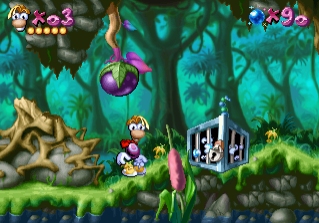
Rayman (pictured)
Chrono Cross
Elder Scrolls - Daggerfall
Nier
Okami

Monte Python and the Holy Grail
The Darkness
Deus Ex
Eternal Darkness (pictured)
Dragon Quest VII: Journey of the Cursed King
Shadow of the Colossus
Link's Crossbow Training
Psychonauts


The Legend of Zelda: Phantom Hourglass
Skies of Arcadia Legends
Rayman 2: The Great Escape
Banjo-Tooie
Star Wars Jedi Knight: Jedi Academy
Red Dead Redemption (pictured)
Rock Band 3
Borderlands

NBA Jam
Starfox
Baten Kaitos
XIII
Viewtiful Joe (pictured)
Lost Odyssey
Super Mario Galaxy 2
Fallout 3

Lego Indiana Jones
Dragon Quest IV: Chapters of the Chosen
Retro Game Challenge (pictured)
Breath of Fire II
Zack and Wiki: The Quest for Barbaros' Treasure
Tales of Symphonia
Golden Sun: The Lost Age
The Legend of Zelda
Zelda II: The Adventure of Link
Sonic & Knuckles

I completed Portal 2's single-player campaign (excellent! great fun) and I'm looking forward to the rest of the co-op. That will be game one of ten!

Sharing Content with Social Relevance

A few months ago, I was fortunate enough to be able to write an editorial series that was published on GameZebo, a casual games review site. The series was called "Core and Casual: What are We Talking About?" (click the link to read part 1).

Well, I'm at it again! This time, I'm tackling the issue of sharing from games to the 'outside world,' generally through social networks like Facebook or specialized gaming networks like Xbox Live. There's an interesting rift right now in what is generally referred to as the "gaming industry" - a small part of the audience is very accustomed to social network games that contain many prompts to post stories about your in-game accomplishments for your friends to see. The rest of the gaming public tends to look upon this practice as a degradation of the sanctity of games, even while the games they play grow more and more "social" (if you need proof, read the comments on Kotaku regarding Valve boss Gabe Newell's recent statement that all of Valve's games will be multiplayer in the future).


I hope having a bit more of a balanced, thoughtful consideration for the benefits of social sharing in games might at least enlighten game designers and players to the opportunities that await them. At the same time, any thinking about the topic should also serve as a warning to those who would abuse the powers social networks bring: namely, those that end up creating games that feel like they're trying to get something out of you instead of giving you something.

You can read the full article on GameZebo. Of course, thoughtful comments and criticisms are always appreciated!

Thursday, April 7, 2011

My Existential Crisis

I was corrupted at an early age by the agents of a dark and powerful force, and for the better part of two decades this force has festered in my soul and grown stronger. Its tendrils reach my brain and re-route logical thought. Its nourishment feeds my body and makes me dependent on it. But two weeks ago, I confronted my own inner Nintendo Fanboy, and I think I may have won.

Consider that the only Nintendo system I have never owned is the Virtual Boy, and that I would gladly trade a week's meals for one, if you can name your price (e-mail me!). Or that I've been present, cash-in-hand, for the day-one launch of the Game Boy Advance, the GameCube, the DS, and the Wii. That my man-child poster wall gives Zelda more real estate than Lord of the Rings (a nerd amongst nerds?) and that my senses detect SNES cartridges on thrift store shelves as readily as most people notice loose cash lying on the sidewalk.

It seems within reason that I'd be picking up the Nintendo 3DS - Nintendo's newest handheld, a significant upgrade to their DS line that can play newer, better games and features a stereoscopic 3D screen (think Avatar) without the need for 3D glasses (and it's awesome!). Indeed, that was my plan.

But I chickened out! Or at least, that's how I first described the decision to not spend my money quite yet. Sure, it has its flaws, the launch lineup of games is terrible, some of its online features won't activate until May, and they're likely to release a new model or drop the price by the holidays, but I knew all that before this weekend. So did I chicken out? Did my miserly attitude hold me back?

My crisis wasn't in deciding whether or not to get the 3DS - the moment that seed of doubt was in my mind, the crisis became whether or not to acknowledge that it was right. I should not buy the 3DS at launch, because I might end up deciding that I don't want it. My crisis was acknowledging that there might be better options out there, a thought that terrified my Inner Nintendo Fanboy. He raged against that thought, but the instant it formed, there was no going back.

I fought and I won, but with questions still lingering ... will I eventually pick one up? Should I hold out for the NGP? Is it finally time to cough up for a smartphone that I can game on?

I suppose time will tell.

Saturday, December 18, 2010

Casual or Core: What are We Talking About?

I was very fortunate to have the opportunity to write a series of opinion pieces that went up on Gamezebo, a casual games review site with an industry-friendly focus. I encourage you to please check them out and leave comments if I've said anything worth responding to or disagreeing with. The links to all four parts are below as well as a selection from part I. Thanks readers!
The games industry has a dirty secret. We hold press conferences and give keynote speeches, put up billboards in Times Square and displays in 7-Elevens. On stage, online, and in every message that reaches public ears, we declare our steadfast dedication to making “core” games, or announce our bold decision to explore “casual” games. Yet in reality this is a dishonest message because every good game creator knows that there has never been a successful game that was either exclusively “core” or exclusively “casual.”

The problem stems from the popular notion that there are two discrete groups of people in the world: casual gamers and core gamers. When someone loosely refers to “casual gamers,” we all smile and nod our heads as though we know the specific group of people they’re talking about. Still, like all labels used to define large groups of people, this system quickly breaks down. At a recent press event, Microsoft caused many of its loyal fans to feel betrayed and alienated, largely due to a few misguided statements that relied heavily on this assumed difference between “core” and “casual” players. More on that later.

Surely, though, there must be some inherent truth to the core/casual divide that makes it so easy to grasp. The first solution is to stop assuming that the world is in black and white – if the original Game Boy could produce two additional shades of gray, then surely people and gamers must come in a few more. If we cease thinking of casual/core as a binary trait, and picture our players as existing on a number line somewhere between casual and core, we can pat ourselves on the back for not dealing in stereotypes, and we get a mental image like this...

Part 1: Core and Casual: What Are We Talking About?
Part 2: Initiation: Ever Played This Game?
Part 3: Taste: Everyone's a Critic
Part 4: My Kind of Gamer

New Thumbstruck posts are coming soon!

Tuesday, August 24, 2010

Something New

Six months ago, I began a post that I never finished, as school ramped up and my time to tend to this blog disappeared. Until I have time to write my first post in a long time, here's the beginning of that unfinished draft, the promised follow-up to my first post on New Super Mario Bros. Wii:

Very soon I'll have no more challenges to complete in New Super Mario Bros. Wii, and realizations like that are always bittersweet. Two nights ago I completed the last level in World 8, having collected every secret coin leading up to that point, which unlocks another eight levels to play. When I'm done with those, I'll have "completed" the game, and won't touch it again until the next time one of my friends sees the distinctive red case on my shelf and asks if they can try it out. When they do, I'm almost certain I'll say yes.
About a week later, I did complete that game - although I can't take all the credit, as I played it from start to finish in cooperation with a rotating cast of friends including my three amazing roommates. Without turning this post into the lengthy review that it was originally intended to be, let me just say that my experience with NSMBW was pure gaming joy the whole way through. The game managed to scratch three strong itches at once:
  1. Nostalgia for my childhood days playing the Super Mario Bros. and Super Mario World games with my brother, taking turns but essentially playing together, trying to get past tough levels and find new shortcuts,
  2. Obsessive-compulsive completion checklists, since each level has three hidden coins that somehow convinced me they all NEEDED to be found,
  3. And the joy of cooperative play, especially in a large group. Here I could share those first two aspects of my experience with my friends. Here co-op was not a separate part of the game but had all of the great hooks that the "main game" possessed - every one of my co-adventurers, by the time we were done, were determined to 100% the game, even while fighting over who got the Penguin Suit.
Needless to say few games have ever come close to checking this many boxes for me and there isn't likely to be another for quite a while. But I have to say I'm quite thankful that I had the chance to share that experience with my friends and roommates while the opportunity presented itself. Though six months have past and I'm currently enjoying other games, including Super Mario Galaxy 2, I'm not likely to supplant those memories any time soon.

Tuesday, February 16, 2010

Secrets of Game Design from 1985

Game developers recognize the value in making their games more accessible to new players. By presenting a game's challenges in a way that does not assume the user has any prior experience, a game designer greatly expands the potential audience for his or her game. Of course, taken too far this can cause a game to suffer from a lack of depth, and it won't to appeal to experienced gamers. Luckily, there's New Super Mario Bros. Wii - a beacon of hope for those who believe in Nintendo's "everyone's a gamer" philosophy, and a fantastic experience for veteran gamers. It's unfair to give all the credit to Nintendo's most recent entry in the series, however, since so much of its appeal (and content) is derived from a series nearly 30 years in the making. Today's post is not about the "New", therefore, but about the old.

It seems to me that the Martians must have deposited the Super Mario Bros. series on Earth in the 1980s as a guide for humanity to design their games by. Modern science may refute it, but the evidence is there. In 1985, Super Mario Bros. provided a fantastic experience for the casual gamer; the interface was simple, the challenges clear. Most importantly, however, it could be played as a game and as a toy - a point I'll get to later.

Point A to Point B
The interface on the Nintendo Entertainment System controller consisted of the + shaped control pad and four face buttons. Two of these buttons were "Start" and "Select" and were easy to ignore. The other two big, round, action buttons were "A" and "B". For someone completely new to gaming, even a simple control scheme like this one can be tough to manage at first, but in Mario, learning how to run and hop your way to victory is all muscle memory. A player can play the first level a few times, jumping between blocks, pits, and goombas, and they will begin to automatically hold "B" to run through the entire level just as a driver instinctively maintains speed with their foot on the gas pedal.

All interfaces have some kind of learning curve, but instead of pausing the game to explain each new move, Mario lets the player discover moves as they need them. In the first level, the player discovers that pushing the control pad in a direction (to the left or right) intuitively moves Mario in that direction. They will likely also discover that pushing up and down does nothing. Furthermore, they find that they can barely walk to the left before hitting an invisible wall; walking to the right, however, pans the camera to reveal more of the game world. The player has immediately learned the first lesson of Mario: you must get from Point A to Point B, and Point B is always some distance to the right of Point A. This means the player now has an objective! They've discovered that moving to the right reveals some interesting game world to them, and their interest is piqued as to where and how this game world ends. As they continue to the right, the world scrolls past like a tape on a reel. And he or she has discovered all of this just by pushing the control pad a few times.

A slow-moving player will pass a hill and a bush in the background, before encountering their first "foreground" elements: a floating "?" block, and a Goomba approaching them on the ground. When the Goomba inevitably collides with the player, he or she learns their second lesson: some things can touch and kill Mario! When they do, the player's progress toward their goal (reach the end of the level) is reset, and they realize they get only get a few tries. All of this is communicated to the player through actions, visuals, and sound.

The next time the player comes back, they know they need to reach the end of the world WITHOUT touching a Goomba. But how? Obviously, this is how the player learns to jump (if they haven't already tried the jump button). In doing so they're likely to accidentally hit their head on a question mark block, and within seconds the game has taught the player (almost) everything there is to know about Mario: run, jump, avoid death, get coins and power-ups, and try to reach the end of the level.

It's possible to know very little about the game and complete its first stage (try playing World 1-1 by keeping "right" pressed down on the directional pad and only using the "A" button). A novice player with only superficial knowledge of the game's interface can achieve success after a few tries. And since the game starts at this level every time (save features didn't quite exist yet), every newcomer to the game is likely to start right here, even if they're playing with a person who's reached World 8 before.

Toy Plumber
Of course, the player wouldn't keep playing to learn these goals and to master the interface needed to achieve them if it wasn't fun. The brilliance of Super Mario Bros. has always been that it is a fun toy in addition to a great game. A player could play World 1-1 dozens of times, repeatedly failing and starting over, and still enjoy themselves. Why? For one thing, Mario is a joy to control. He responds to player input exactly as the player expects, and he performs acrobatic feats cartoonishly disproportionate to his stocky figure. Furthermore, every motion Mario makes is accompanied with sound effects that almost seem to congratulate the player. Again, take the time to play World 1-1 for a few moments, and make sure the volume is up. Pay close attention to each sound effect, and think of each of them as a congratulations:
  • "Good job, you jumped!"
  • "You got a coin!"
  • "Hey, you landed on a Goomba!"
  • "You smashed a block!", etc.
Nearly every desirable action in the game has an accompanying sound effect. Just playing with the physics of the game world and discovering all that there is to do is fun as a result.
This kind of play without goals, which is fun simply because it brings us joy to test our abilities, is like playing with a really fun toy. If you think back to your first board games, you probably found the physical act of moving the pieces like toys around the board more fun than actually following the rules of the game (a fact which probably frustrated your parents). In checkers, jumping a piece can be fun just for the satisfaction of slamming your own piece down on the other side of your opponent's. The fun you once had jumping checkers may have paved the way for your appreciation of the game's rules and strategy. A player's skill and reasons for enjoying Super Mario Bros. progress the same way.

It's possible that the only thing I've convinced you of is that games are only fun when they let you jump on or over things to kill them. Whatever the case may be, I hope you'll make your thoughts heard in the comments section. Soon I'll be sharing my thoughts on how New Super Mario Bros. Wii appeals to people seeking a challenge without rejecting newcomers. I hope you'll find it interesting whether or not you've played the game.

Sunday, February 14, 2010

World, Meet Melton Hayes

Melton Hayes is only eighteen years old, and has spent the last few years of his life working in the kitchen of a small local pub. Melton's always been an unremarkable kid, mostly unnoticed by the salt-miners that frequent the pub at the end of the work day, but he cooks good food and always comes in on time. His only worthwhile education has been on-the-job, and while he's not particularly strong he's developed the charm and cunning needed to navigate the volatile social climate of the slums of Crymar, the Jewel of the Eight Cities.
 It was only recently that an intoxicated veteran general took notice of Melton's more subtle peculiarities - his handiness with a cutting knife, his intuition with flavor, and his keen understanding of differences in taste. Melton didn't quite know it himself yet, but what Riurik and his band of adventurers-for-hire recognized then was that the boy was gifted, touched by forces of nature unknown to most men, and was destined for greatness.

By the way, I'm playing Dungeons and Dragons for the first time. And the inspiration and lessons in game design that this has granted me have sent me back to Thumbstruck. Hopefully this means frequent, worthwhile posts. I hope you'll join me!

Now, it's time to go discover more about my mysterious connection to the arcane world of the Feywild.

Saturday, October 3, 2009

Time Trials

One doesn't often encounter the words "Time Attack" in video games anymore. A time trial mode just wouldn't carry the same heft as "Campaign," "Co-Op," or "Stage Creator" on game's main menu these days, and that's probably for the best. I am glad, however, that the concept of time trials hasn't been lost completely, but instead integrated into modern games in new ways. Super Mario Galaxy let players attempt speed-runs on certain levels for stars, for instance, and 2008's Prince of Persia included an Achievement for finishing the game's story in less than 12 hours. As another example, I have been known obsess a bit over the incremental improvements I make with each failed attempt in Super Smash Bros. Brawl's Events mode.

I'm currently enrolled in the second-to-last semester of my undergraduate education, and in many ways it feels like a race against time. In the last few months, I've found that the way I pursue life goals has an analogue in the relationship between video games and players.

I know it's not a perfect analogy, but humor me for a moment. Like games, my college career:
  • ...is segmented into episodes, with each episode requiring me to learn from the episode before it while adding a new layer of complexity or challenge
  • ...has given me many "second chances," offering a chance to try, fail, and try again.
  • ...presents me with a wide variety of potential experiences, leaving me to interpret what tasks I must complete and how to measure my own success.
Most significant here is that last point. Of course I'm hoping to pass all my classes with a decent GPA, but beyond that there are so many ways that my peers and I measure success, some of which are unique to me and my personal goals.

Just as each person has their own goals in real life, they also have their own ways of approaching games. Over a year ago, Mitch Krpata outlined a working set of terms for a "New Taxonomy of Gamers" on his blog, Insult Swordfighting. In this series of articles, he suggested that some players play games as "tourists," experiencing the content that the game has to offer and being done with it. Others, he said, are "completists," trying to unlock every secret and finish every challenge for a 100% completion rating. (Note: Krpata's essays cover a lot more ground than what is summarized here, and I highly recommend giving them your attention.)

If different types of gamers can all approach the same game (a popular example: Rock Band) and find their own reasons to enjoy it, then the strength of that game is not in its challenge or the amount of content it presents. The game imposes nothing on its player, instead allowing them to play game designer and determine what the goals are and when they have "won." Open-ended games like The Sims push this concept in obvious ways, but even a traditional linear RPG can allow its player some degree of freedom by including side-quests or multiple endings. These games present a system to the player, and allow the player to project their own goals within the framework they provide. Just as I've discovered my own goals (and means of pursuing them) through the experiences I've been fortunate to have, a player discovers what they hope to achieve in a game, and then works to rise to their own self-imposed challenge.

This analogy might help next time I feel stressed about my workload. After all, if the tasks before me are anything similar to the challenges in games, I can rest easy knowing that even if I don't complete them before the clock reaches zero, the experience was worth it - if only for the fun I had trying.

Friday, August 28, 2009

Dreaming Big

Quick update: I haven't had internet at my house for the past two weeks. But the technicians are coming to get us all hooked up tomorrow afternoon, at which point Thumbstruck should be back to its regularly-scheduled programming.

Since the Vintage Game Club is done with Majora's Mask, I'll probably only make one more post on the subject, not to drag things out.

School has started back up and the semester is in full swing. I'm working on getting my research project organized, as well as a very interesting class about using robotics and game-like video interfaces to convey information like a conductor to an orchestra.

Lastly, my peers and I are dreaming big about the upcoming series of independent game festivals we're hoping to enter. I'm sure as we get more organized and actually make progress that I'll have more to say on the subject.

Check back in a few days!

Tuesday, August 4, 2009

Bomber's Notebook, Part 2 - The Ticking Clock

In my previous post, I detailed the first chapter of Link's adventures through time in The Legend of Zelda: Majora's Mask. Here's chapter 2! For more discussion about this game (from a lot of interesting people), check out The Vintage Game Club.

Since the game's core mechanic revolves around the three-day time limit, it goes without saying that time is an ever-present factor in Majora's Mask. Its predecessor, Ocarina of Time, focused on the protagonist's journey seven years into the future, and the stark contrast between the whimsical world of his childhood and the dark realities of his adulthood. The game required Link to travel through time to save the world. A few puzzles required him to travel back in time and "change the past" (an illusion of some cleverly scripted events). In this case, "time" empowered and enabled Link.

In Majora's Mask, time is an inhibitor. Link can manipulate time in this game just as he could in Ocarina, but he does so only to put off the inevitable. Instead of leaping forward in time to cheat his way into a life he shouldn't be experiencing yet, Link loops time to avoid a near-future he knows is coming and desperately wants to avoid. He has to make as much progress as he can within the three-day time limit in order to reach a preservable milestone, i.e. defeating a boss or learning a song. A countdown clock resides at the bottom of the screen, always reminding the player of the world's impending doom. Time is not on Link's side, and the limitations it imposes can sometimes feel crippling.

This point is evident in how many complaints the game receives for its time limit. Plenty of games make use of timers: Super Mario Bros. limits how many seconds you have per level, for instance, and Oregon Trail counted the days down before winter came, drastically reducing the player's chance of survival. Pikmin's brilliantly inspired design suffered as a result of a 30-"day" time limit to complete the story, a complaint rectified in the sequel. Majora's Mask, similarly, has frustrated many experienced gamers with the limits imposed by its three-day cycle. Each cycle requires some planning on the player's part to ensure that they make efficient use of their time and get all of their goals accomplished.

At the VGC we've talked about how progress in the game is not measured by changes made to the world, but by information Link has learned and the tools he has collected. Link regains his human form, and a slew of new opportunities open up in Clock Town: most importantly, he is allowed to go out beyond the city walls. In the Southern Swamp, it's easy for Link to get lost - that is, until he purchases a map from Tingle. It might take Link a long time to make it to Woodfall Temple, as well, but once he knows the Song of Awakening and the Song of Soaring, getting there is quick and painless. Lastly, the puzzles in Woodfall Temple are on the easier side, but no one's perfect, and it's possible that while the ground is shaking and the clock tower is chiming on The Third Day, the player is still only halfway through the dungeon. That's okay! They can just re-set time, armed with the knowledge they need to breeze through the dungeon at twice the speed they did the first time (I learned this first hand, as my Wii froze after four hours of play - I covered the same ground in less than half the time afterward).

Contrast this with Ocarina's formula for progress, which saves incremental changes to the environment - a door has been unlocked, a mini-boss has been defeated, a treasure chest has been opened. In that game, Link can save whenever he likes; in Majora's Mask, he can only save his personal progress by undoing all the progressive changes he's made to the game world. I can't help but wonder if this unique design suffers from having dungeons that too closely match the formula laid out in Ocarina; after all, a dungeon is only worth the challenge of mastering its puzzles. If any one dungeon had more replay value, the game could capitalize on its own penchant for forcing the player to repeat familiar tasks. Luckily, this philosophy is carried out in the side-quests of the Bomber's Notebook - an aspect of the game I hope to talk about soon.

As Link, I defeated Odolwa, the evil spirit trapping the swamp's guardian giant, and saved the Monkeys and the Deku Scrubs from their various minor perils. They thanked me, but a wise Deku Scrub noted that they can't shake the feeling things are still about to go quite wrong. They're correct, of course - that moon isn't stopping itself. A few in-game hours and a dozen unsuccessful races later, the Deku butler finally yielded and told me I remind him of his son - a boy whose soul I now possess in mask form. These are problems future and past, but only I seem to be fully aware of them, as the rest of Termina is stuck in its three-day bubble. I, as Link, have the burden of being able to see past this bubble in either direction, and the power to act on what I see. In that way, I am alone - my only company is Tatl the fairy, and the ever-present ticking clock.

Three-Day Cycles: 3 (5 total)
Accomplishments:
Learned two songs; earned three masks; defeated Odolwa at Woodfall Temple; completed first Spider House; got some pieces of heart and notebook entries; restored second Great Fairy and learned the magic Spin Attack; and got the Hero's Bow, Pictograph Box, and Magic Beans.

Tuesday, July 28, 2009

Bomber's Notebook, Part 1 - New Kid in Town

For the past few weeks, The Vintage Game Club has been playing through and discussing The Legend of Zelda: Majora's Mask. If you're not familiar with the Vintage Game Club yet, take a moment to click the link and catch up on some of the most interesting discussion surrounding games going on right now. (A more competent introduction to the club can be found at co-founder Michael Abbott's blog, The Brainy Gamer). I find it amazing how this group can get me looking at a game I've already played five or six times before in a completely new light.

In order to set this play-through apart from my other save files and foster some critical thinking, I began the game considering the chain of events from Link's point of view. Early in the game, the player is given The Bomber's Notebook, an important item that embodies one of the key mechanisms for navigating Majora's Mask's unique plot structure. Whenever Link encounters an NPC that needs assistance, the who, what, where, and when is recorded in the Bomber's Notebook, and as the player progresses in the game they begin to fill the notebook with a detailed itinerary for the inhabitants of Clock Town and the surrounding world. Instead of the player needing to take notes manually, they can consult the Bomber's Notebook if they need to track down a particular character to complete a side-quest.

The game takes place over the course of three days, at which point a scary-looking moon crashes into Clock Town, destroying the world. Link escapes by traveling back in time to the start of the three days, repeating this cycle ad nauseum until he has collected the tools and information necessary to stop the apocalypse. The notebook takes on a role here, too - since all of Link's good deeds are reset when he travels back in time, he is left with only the stickers in his notebook as a lasting sign of his generosity. Link can't help everyone on every day (unless the player is feeling particularly ambitious), but he can console himself - and remind himself he isn't crazy - by consulting the permanent record in the notebook.

For the next week or so I'll be playing Majora's Mask, updating here and at the VGC's forum for the play-through, putting together a sort of Bomber's Notebook of my own. I believe that organizing the information presented by the game in this way will give me a new angle to observe the game from, and I hope to have some more interesting things to say in the future.

Three-Day Cycles: 2
Accomplishments:
Started quest; restored first Great Fairy and got Magic meter; recovered Ocarina of Time; learned two songs; turned human again; got 3 masks including Deku Scrub Mask; got Adult Wallet, Bomber's Notebook, Bomb Bag, and 4 Pieces of Heart; and met 8 people in Bomber's Notebook.

Wednesday, July 22, 2009

Once You Go Gamer

There is a billboard near Penn Station advertising Verizon Mobile's new "app store." The images may be hard to see above, but nearly half of the "apps" being advertised are games - Prince of Persia, LIFE, Tetris, Guitar Hero, etc. Many people see this billboard: men and women, college students and baby boomers, fast food employees and professional athletes.

Down the block there's another billboard, showcasing a handful of games available on the iPhone and iPod Touch. One block in the other direction, there is a particularly gaudy two-story GameStop. And tomorrow, just a short walk away, Time Square's Military Island is being taken over by Nintendo to promote the release of Wii Sports Resort with a tropical-island themed "beach party." As I considered these facts, one after the other, on my way home yesterday, I caught myself silently celebrating a small victory for this great pastime called gaming.

Then I stopped myself, remembering that nearly every facet of our diverse culture manages to find a home in New York City. I remembered that there are actually a few games downloaded on my mother's iPhone - but she's never played any of them, and I or my sister or brother put them there.

Still, I couldn't help my wishful thinking. Maybe it's all the marketing getting to me, or my recently increased exposure to online gaming portals that reach the newer portions of the expanding gaming audience, but I couldn't help myself, and I formulated a very unscientific hypothesis in my head:

Within five years from now, my mother will be a gamer.

My father? Well, I'll give Dad ten years. He doesn't have the iPhone in his pocket quite yet.

When I got home, my dad - a computer scientist who is currently pursuing post-graduate studies in history - asked me a question out of innocent curiosity. He asked if they make games about the factors contributing to various global conflicts throughout history. Not wanting to waste a fine example of divine providence, I did my best to hide my enthusiasm while I attempted to explain the differences between the Civilization series and the Total War games. I offered up my review of a Gettysburg game I once played in high school, and mentioned the recently-announced project by a Norfolk University professor to make a game about the Underground Railroad (Source: Kotaku). Then I stopped myself from scaring him off with too much information, figuring Google and Wikipedia could handle the rest.

My father was just asking a simple question, of course, and it probably doesn't mean anything... or maybe, my future children are going to look forward to playing video games with Grandpa.

Hmm... I may have gone too far with that last bit. Here's a fun diversion that I encourage you all to try: choose three people in your life that don't play games - even if one of them is you! Now, pick the three games that you think could actually engage them enough to bring them back for more. Let me know what you come up with in the comments.