Disclaimer: The title of this post contains an anachronism. You've been warned!
In April I said I wanted to play more games. My last game purchase was Portal 2 (a great investment), but I told myself I wasn't allowed to spend another penny on games until I had completed that game and at least nine others to some level of satisfaction. This gave me a goal, some pressure to play quickly, and would theoretically help me tick a few boxes off on my long list of "games to play."
Well, it turns out that I have great timing! Two weeks ago I moved into Queens (bye bye, Jersey, though my heart belongs to you). When my father learned that Lori and I were saving money by not signing up for a cable TV bill, he reminisced about the days before cable TV and said, "Wow, so you're living in the 70's, huh?" I pointed to the piles and piles of games and DVDs, and though the irony was apparent, I had to drive it home:
"No, dad, this is the 21st century - I pay for my internet bill and Netflix, and I have my games. I don't need cable!"
But really, what's been my go-to source of entertainment after work, now that I don't have 100 channels of 24-hour entertainment? Games, of course! Games that might have previously seemed like too large a time investment this late at night, or too alienating for the other people in the room - now, games are my nightly pastime, and that just feels right.
The move also means I'm closer to work, which means a shorter commute (bye bye, bus! I never really loved you!), which means my gaming balance has shifted from being all mobile games on my DS, to weigh much more heavily on couch-gaming on my Wii. Change is good!
Now that I'm more than halfway through, I'm afraid what happens at 10! Most likely I slip right back into my old habits of compulsively picking up cheap used games at a faster rate than I can play them - but maybe, just maybe, I'll be playing a little more often than before. We'll see!
6/10 games complete.
4 games to go before I can buy games again.
Saturday, June 18, 2011
Tuesday, April 26, 2011
Play More Games
I was this close to starting a new Final Fantasy VII file the other day! Thiiiiiis close. Why? Because of this excellent series of open letters between gaming bloggers Leigh Alexander and Kirk Hamilton, chronicling the former's obsession with the game and the latter's recent introduction to it. I defy anyone to read and not let nostalgia get the better of them.
That being said, I have "a thing" about replaying single-player narrative games. Since I fancy myself a connoisseur (full disclosure: spellcheck helped me out on that word) of the interactive arts, I have it in my head that I need to be constantly broadening my pallet, so to speak. Of course there's nothing wrong with replaying games, and in fact games in their purest form are meant to be re-played. Still, I think there's something to be said for trying new things.
In the last two years I have taken to buying used games at a rate that far exceeds my capacity to play them. I'm not really averse to playing decade-old games for the first time (this year I've played and finished Metal Gear Solid 2, Chrono Trigger, and Metroid Zero Mission, amongst others), so after my recent purchase of Portal 2 I set a temporary rule for myself:
I'm not allowed to buy another game until I beat ten games that I own but haven't beaten before.
I'm willing to be flexible, of course, since some games don't focus on their "completed state" (i.e. Rock Band 3) and others perhaps have unrealistic goals for theirs (i.e. Pokemon Black). That being said, I need some help sorting through the stockpile of games I've amassed. That's where you come in! Help me choose games! See anything that sets off a wave of nostalgia? Want to play through any of these alongside me? Let me know!
In no particular order, the list of games I own that I should probably play:
Left 4 Dead 2
StarCraft
Braid
Machinarium (pictured)
StarFox: Command
Final Fantasy Tactics A2: Grimoire of the Rift
Gish
Aurora
Magicka
Monday Night Combat (pictured)
Cortex Command
Osmos
World of Goo
Penumbra
Aquaria
Lugaru
Ben There, Dan That!
Time, Gentlemen, Please!
Revenge of the Titans
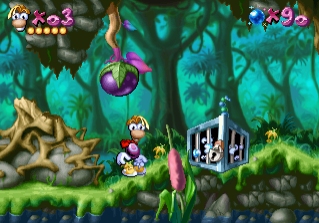
Rayman (pictured)
Chrono Cross
Elder Scrolls - Daggerfall
Nier
Okami
Monte Python and the Holy Grail
The Darkness
Deus Ex
Eternal Darkness (pictured)
Dragon Quest VII: Journey of the Cursed King
Shadow of the Colossus
Link's Crossbow Training
Psychonauts
The Legend of Zelda: Phantom Hourglass
Skies of Arcadia Legends
Rayman 2: The Great Escape
Banjo-Tooie
Star Wars Jedi Knight: Jedi Academy
Red Dead Redemption (pictured)
Rock Band 3
Borderlands
NBA Jam
Starfox
Baten Kaitos
XIII
Viewtiful Joe (pictured)
Lost Odyssey
Super Mario Galaxy 2
Fallout 3
Lego Indiana Jones
Dragon Quest IV: Chapters of the Chosen
Retro Game Challenge (pictured)
Breath of Fire II
Zack and Wiki: The Quest for Barbaros' Treasure
Tales of Symphonia
Golden Sun: The Lost Age
The Legend of Zelda
Zelda II: The Adventure of Link
Sonic & Knuckles
I completed Portal 2's single-player campaign (excellent! great fun) and I'm looking forward to the rest of the co-op. That will be game one of ten!
That being said, I have "a thing" about replaying single-player narrative games. Since I fancy myself a connoisseur (full disclosure: spellcheck helped me out on that word) of the interactive arts, I have it in my head that I need to be constantly broadening my pallet, so to speak. Of course there's nothing wrong with replaying games, and in fact games in their purest form are meant to be re-played. Still, I think there's something to be said for trying new things.
In the last two years I have taken to buying used games at a rate that far exceeds my capacity to play them. I'm not really averse to playing decade-old games for the first time (this year I've played and finished Metal Gear Solid 2, Chrono Trigger, and Metroid Zero Mission, amongst others), so after my recent purchase of Portal 2 I set a temporary rule for myself:
I'm not allowed to buy another game until I beat ten games that I own but haven't beaten before.
I'm willing to be flexible, of course, since some games don't focus on their "completed state" (i.e. Rock Band 3) and others perhaps have unrealistic goals for theirs (i.e. Pokemon Black). That being said, I need some help sorting through the stockpile of games I've amassed. That's where you come in! Help me choose games! See anything that sets off a wave of nostalgia? Want to play through any of these alongside me? Let me know!
In no particular order, the list of games I own that I should probably play:
Left 4 Dead 2
StarCraft
Braid
Machinarium (pictured)
StarFox: Command
Final Fantasy Tactics A2: Grimoire of the Rift
Gish
Aurora
MagickaMonday Night Combat (pictured)
Cortex Command
Osmos
World of Goo
Penumbra
Aquaria
Lugaru
Ben There, Dan That!Time, Gentlemen, Please!
Revenge of the Titans
Rayman (pictured)
Chrono Cross
Elder Scrolls - Daggerfall
Nier
Okami
Monte Python and the Holy GrailThe Darkness
Deus Ex
Eternal Darkness (pictured)
Dragon Quest VII: Journey of the Cursed King
Shadow of the Colossus
Link's Crossbow Training
Psychonauts
The Legend of Zelda: Phantom Hourglass
Skies of Arcadia Legends
Rayman 2: The Great Escape
Banjo-Tooie
Star Wars Jedi Knight: Jedi Academy
Red Dead Redemption (pictured)
Rock Band 3
Borderlands
NBA Jam
Starfox
Baten Kaitos
XIII
Viewtiful Joe (pictured)
Lost Odyssey
Super Mario Galaxy 2
Fallout 3
Lego Indiana Jones
Dragon Quest IV: Chapters of the Chosen
Retro Game Challenge (pictured)
Breath of Fire II
Zack and Wiki: The Quest for Barbaros' Treasure
Tales of Symphonia
Golden Sun: The Lost Age
The Legend of Zelda
Zelda II: The Adventure of Link
Sonic & Knuckles
I completed Portal 2's single-player campaign (excellent! great fun) and I'm looking forward to the rest of the co-op. That will be game one of ten!
Sharing Content with Social Relevance
A few months ago, I was fortunate enough to be able to write an editorial series that was published on GameZebo, a casual games review site. The series was called "Core and Casual: What are We Talking About?" (click the link to read part 1).
Well, I'm at it again! This time, I'm tackling the issue of sharing from games to the 'outside world,' generally through social networks like Facebook or specialized gaming networks like Xbox Live. There's an interesting rift right now in what is generally referred to as the "gaming industry" - a small part of the audience is very accustomed to social network games that contain many prompts to post stories about your in-game accomplishments for your friends to see. The rest of the gaming public tends to look upon this practice as a degradation of the sanctity of games, even while the games they play grow more and more "social" (if you need proof, read the comments on Kotaku regarding Valve boss Gabe Newell's recent statement that all of Valve's games will be multiplayer in the future).
I hope having a bit more of a balanced, thoughtful consideration for the benefits of social sharing in games might at least enlighten game designers and players to the opportunities that await them. At the same time, any thinking about the topic should also serve as a warning to those who would abuse the powers social networks bring: namely, those that end up creating games that feel like they're trying to get something out of you instead of giving you something.
You can read the full article on GameZebo. Of course, thoughtful comments and criticisms are always appreciated!
Well, I'm at it again! This time, I'm tackling the issue of sharing from games to the 'outside world,' generally through social networks like Facebook or specialized gaming networks like Xbox Live. There's an interesting rift right now in what is generally referred to as the "gaming industry" - a small part of the audience is very accustomed to social network games that contain many prompts to post stories about your in-game accomplishments for your friends to see. The rest of the gaming public tends to look upon this practice as a degradation of the sanctity of games, even while the games they play grow more and more "social" (if you need proof, read the comments on Kotaku regarding Valve boss Gabe Newell's recent statement that all of Valve's games will be multiplayer in the future).
I hope having a bit more of a balanced, thoughtful consideration for the benefits of social sharing in games might at least enlighten game designers and players to the opportunities that await them. At the same time, any thinking about the topic should also serve as a warning to those who would abuse the powers social networks bring: namely, those that end up creating games that feel like they're trying to get something out of you instead of giving you something.
You can read the full article on GameZebo. Of course, thoughtful comments and criticisms are always appreciated!
Thursday, April 7, 2011
My Existential Crisis
I was corrupted at an early age by the agents of a dark and powerful force, and for the better part of two decades this force has festered in my soul and grown stronger. Its tendrils reach my brain and re-route logical thought. Its nourishment feeds my body and makes me dependent on it. But two weeks ago, I confronted my own inner Nintendo Fanboy, and I think I may have won.
Consider that the only Nintendo system I have never owned is the Virtual Boy, and that I would gladly trade a week's meals for one, if you can name your price (e-mail me!). Or that I've been present, cash-in-hand, for the day-one launch of the Game Boy Advance, the GameCube, the DS, and the Wii. That my man-child poster wall gives Zelda more real estate than Lord of the Rings (a nerd amongst nerds?) and that my senses detect SNES cartridges on thrift store shelves as readily as most people notice loose cash lying on the sidewalk.
It seems within reason that I'd be picking up the Nintendo 3DS - Nintendo's newest handheld, a significant upgrade to their DS line that can play newer, better games and features a stereoscopic 3D screen (think Avatar) without the need for 3D glasses (and it's awesome!). Indeed, that was my plan.
But I chickened out! Or at least, that's how I first described the decision to not spend my money quite yet. Sure, it has its flaws, the launch lineup of games is terrible, some of its online features won't activate until May, and they're likely to release a new model or drop the price by the holidays, but I knew all that before this weekend. So did I chicken out? Did my miserly attitude hold me back?
My crisis wasn't in deciding whether or not to get the 3DS - the moment that seed of doubt was in my mind, the crisis became whether or not to acknowledge that it was right. I should not buy the 3DS at launch, because I might end up deciding that I don't want it. My crisis was acknowledging that there might be better options out there, a thought that terrified my Inner Nintendo Fanboy. He raged against that thought, but the instant it formed, there was no going back.
I fought and I won, but with questions still lingering ... will I eventually pick one up? Should I hold out for the NGP? Is it finally time to cough up for a smartphone that I can game on?
I suppose time will tell.
Consider that the only Nintendo system I have never owned is the Virtual Boy, and that I would gladly trade a week's meals for one, if you can name your price (e-mail me!). Or that I've been present, cash-in-hand, for the day-one launch of the Game Boy Advance, the GameCube, the DS, and the Wii. That my man-child poster wall gives Zelda more real estate than Lord of the Rings (a nerd amongst nerds?) and that my senses detect SNES cartridges on thrift store shelves as readily as most people notice loose cash lying on the sidewalk.
It seems within reason that I'd be picking up the Nintendo 3DS - Nintendo's newest handheld, a significant upgrade to their DS line that can play newer, better games and features a stereoscopic 3D screen (think Avatar) without the need for 3D glasses (and it's awesome!). Indeed, that was my plan.
But I chickened out! Or at least, that's how I first described the decision to not spend my money quite yet. Sure, it has its flaws, the launch lineup of games is terrible, some of its online features won't activate until May, and they're likely to release a new model or drop the price by the holidays, but I knew all that before this weekend. So did I chicken out? Did my miserly attitude hold me back?
My crisis wasn't in deciding whether or not to get the 3DS - the moment that seed of doubt was in my mind, the crisis became whether or not to acknowledge that it was right. I should not buy the 3DS at launch, because I might end up deciding that I don't want it. My crisis was acknowledging that there might be better options out there, a thought that terrified my Inner Nintendo Fanboy. He raged against that thought, but the instant it formed, there was no going back.
I fought and I won, but with questions still lingering ... will I eventually pick one up? Should I hold out for the NGP? Is it finally time to cough up for a smartphone that I can game on?
I suppose time will tell.
Saturday, December 18, 2010
Casual or Core: What are We Talking About?
I was very fortunate to have the opportunity to write a series of opinion pieces that went up on Gamezebo, a casual games review site with an industry-friendly focus. I encourage you to please check them out and leave comments if I've said anything worth responding to or disagreeing with. The links to all four parts are below as well as a selection from part I. Thanks readers!
Part 1: Core and Casual: What Are We Talking About?
Part 2: Initiation: Ever Played This Game?
Part 3: Taste: Everyone's a Critic
Part 4: My Kind of Gamer
New Thumbstruck posts are coming soon!
The games industry has a dirty secret. We hold press conferences and give keynote speeches, put up billboards in Times Square and displays in 7-Elevens. On stage, online, and in every message that reaches public ears, we declare our steadfast dedication to making “core” games, or announce our bold decision to explore “casual” games. Yet in reality this is a dishonest message because every good game creator knows that there has never been a successful game that was either exclusively “core” or exclusively “casual.”
The problem stems from the popular notion that there are two discrete groups of people in the world: casual gamers and core gamers. When someone loosely refers to “casual gamers,” we all smile and nod our heads as though we know the specific group of people they’re talking about. Still, like all labels used to define large groups of people, this system quickly breaks down. At a recent press event, Microsoft caused many of its loyal fans to feel betrayed and alienated, largely due to a few misguided statements that relied heavily on this assumed difference between “core” and “casual” players. More on that later.
Surely, though, there must be some inherent truth to the core/casual divide that makes it so easy to grasp. The first solution is to stop assuming that the world is in black and white – if the original Game Boy could produce two additional shades of gray, then surely people and gamers must come in a few more. If we cease thinking of casual/core as a binary trait, and picture our players as existing on a number line somewhere between casual and core, we can pat ourselves on the back for not dealing in stereotypes, and we get a mental image like this...
Part 1: Core and Casual: What Are We Talking About?
Part 2: Initiation: Ever Played This Game?
Part 3: Taste: Everyone's a Critic
Part 4: My Kind of Gamer
New Thumbstruck posts are coming soon!
Tuesday, August 24, 2010
Something New
Six months ago, I began a post that I never finished, as school ramped up and my time to tend to this blog disappeared. Until I have time to write my first post in a long time, here's the beginning of that unfinished draft, the promised follow-up to my first post on New Super Mario Bros. Wii:
Very soon I'll have no more challenges to complete in New Super Mario Bros. Wii, and realizations like that are always bittersweet. Two nights ago I completed the last level in World 8, having collected every secret coin leading up to that point, which unlocks another eight levels to play. When I'm done with those, I'll have "completed" the game, and won't touch it again until the next time one of my friends sees the distinctive red case on my shelf and asks if they can try it out. When they do, I'm almost certain I'll say yes.About a week later, I did complete that game - although I can't take all the credit, as I played it from start to finish in cooperation with a rotating cast of friends including my three amazing roommates. Without turning this post into the lengthy review that it was originally intended to be, let me just say that my experience with NSMBW was pure gaming joy the whole way through. The game managed to scratch three strong itches at once:
- Nostalgia for my childhood days playing the Super Mario Bros. and Super Mario World games with my brother, taking turns but essentially playing together, trying to get past tough levels and find new shortcuts,
- Obsessive-compulsive completion checklists, since each level has three hidden coins that somehow convinced me they all NEEDED to be found,
- And the joy of cooperative play, especially in a large group. Here I could share those first two aspects of my experience with my friends. Here co-op was not a separate part of the game but had all of the great hooks that the "main game" possessed - every one of my co-adventurers, by the time we were done, were determined to 100% the game, even while fighting over who got the Penguin Suit.
Tuesday, February 16, 2010
Secrets of Game Design from 1985
Game developers recognize the value in making their games more accessible to new players. By presenting a game's challenges in a way that does not assume the user has any prior experience, a game designer greatly expands the potential audience for his or her game. Of course, taken too far this can cause a game to suffer from a lack of depth, and it won't to appeal to experienced gamers. Luckily, there's New Super Mario Bros. Wii - a beacon of hope for those who believe in Nintendo's "everyone's a gamer" philosophy, and a fantastic experience for veteran gamers. It's unfair to give all the credit to Nintendo's most recent entry in the series, however, since so much of its appeal (and content) is derived from a series nearly 30 years in the making. Today's post is not about the "New", therefore, but about the old.
It seems to me that the Martians must have deposited the Super Mario Bros. series on Earth in the 1980s as a guide for humanity to design their games by. Modern science may refute it, but the evidence is there. In 1985, Super Mario Bros. provided a fantastic experience for the casual gamer; the interface was simple, the challenges clear. Most importantly, however, it could be played as a game and as a toy - a point I'll get to later.
Point A to Point B
The interface on the Nintendo Entertainment System controller consisted of the + shaped control pad and four face buttons. Two of these buttons were "Start" and "Select" and were easy to ignore. The other two big, round, action buttons were "A" and "B". For someone completely new to gaming, even a simple control scheme like this one can be tough to manage at first, but in Mario, learning how to run and hop your way to victory is all muscle memory. A player can play the first level a few times, jumping between blocks, pits, and goombas, and they will begin to automatically hold "B" to run through the entire level just as a driver instinctively maintains speed with their foot on the gas pedal.
All interfaces have some kind of learning curve, but instead of pausing the game to explain each new move, Mario lets the player discover moves as they need them. In the first level, the player discovers that pushing the control pad in a direction (to the left or right) intuitively moves Mario in that direction. They will likely also discover that pushing up and down does nothing. Furthermore, they find that they can barely walk to the left before hitting an invisible wall; walking to the right, however, pans the camera to reveal more of the game world. The player has immediately learned the first lesson of Mario: you must get from Point A to Point B, and Point B is always some distance to the right of Point A. This means the player now has an objective! They've discovered that moving to the right reveals some interesting game world to them, and their interest is piqued as to where and how this game world ends. As they continue to the right, the world scrolls past like a tape on a reel. And he or she has discovered all of this just by pushing the control pad a few times.
A slow-moving player will pass a hill and a bush in the background, before encountering their first "foreground" elements: a floating "?" block, and a Goomba approaching them on the ground. When the Goomba inevitably collides with the player, he or she learns their second lesson: some things can touch and kill Mario! When they do, the player's progress toward their goal (reach the end of the level) is reset, and they realize they get only get a few tries. All of this is communicated to the player through actions, visuals, and sound.
The next time the player comes back, they know they need to reach the end of the world WITHOUT touching a Goomba. But how? Obviously, this is how the player learns to jump (if they haven't already tried the jump button). In doing so they're likely to accidentally hit their head on a question mark block, and within seconds the game has taught the player (almost) everything there is to know about Mario: run, jump, avoid death, get coins and power-ups, and try to reach the end of the level.
It's possible to know very little about the game and complete its first stage (try playing World 1-1 by keeping "right" pressed down on the directional pad and only using the "A" button). A novice player with only superficial knowledge of the game's interface can achieve success after a few tries. And since the game starts at this level every time (save features didn't quite exist yet), every newcomer to the game is likely to start right here, even if they're playing with a person who's reached World 8 before.
Toy Plumber
Of course, the player wouldn't keep playing to learn these goals and to master the interface needed to achieve them if it wasn't fun. The brilliance of Super Mario Bros. has always been that it is a fun toy in addition to a great game. A player could play World 1-1 dozens of times, repeatedly failing and starting over, and still enjoy themselves. Why? For one thing, Mario is a joy to control. He responds to player input exactly as the player expects, and he performs acrobatic feats cartoonishly disproportionate to his stocky figure. Furthermore, every motion Mario makes is accompanied with sound effects that almost seem to congratulate the player. Again, take the time to play World 1-1 for a few moments, and make sure the volume is up. Pay close attention to each sound effect, and think of each of them as a congratulations:
This kind of play without goals, which is fun simply because it brings us joy to test our abilities, is like playing with a really fun toy. If you think back to your first board games, you probably found the physical act of moving the pieces like toys around the board more fun than actually following the rules of the game (a fact which probably frustrated your parents). In checkers, jumping a piece can be fun just for the satisfaction of slamming your own piece down on the other side of your opponent's. The fun you once had jumping checkers may have paved the way for your appreciation of the game's rules and strategy. A player's skill and reasons for enjoying Super Mario Bros. progress the same way.
It's possible that the only thing I've convinced you of is that games are only fun when they let you jump on or over things to kill them. Whatever the case may be, I hope you'll make your thoughts heard in the comments section. Soon I'll be sharing my thoughts on how New Super Mario Bros. Wii appeals to people seeking a challenge without rejecting newcomers. I hope you'll find it interesting whether or not you've played the game.
It seems to me that the Martians must have deposited the Super Mario Bros. series on Earth in the 1980s as a guide for humanity to design their games by. Modern science may refute it, but the evidence is there. In 1985, Super Mario Bros. provided a fantastic experience for the casual gamer; the interface was simple, the challenges clear. Most importantly, however, it could be played as a game and as a toy - a point I'll get to later.
Point A to Point B
The interface on the Nintendo Entertainment System controller consisted of the + shaped control pad and four face buttons. Two of these buttons were "Start" and "Select" and were easy to ignore. The other two big, round, action buttons were "A" and "B". For someone completely new to gaming, even a simple control scheme like this one can be tough to manage at first, but in Mario, learning how to run and hop your way to victory is all muscle memory. A player can play the first level a few times, jumping between blocks, pits, and goombas, and they will begin to automatically hold "B" to run through the entire level just as a driver instinctively maintains speed with their foot on the gas pedal.
All interfaces have some kind of learning curve, but instead of pausing the game to explain each new move, Mario lets the player discover moves as they need them. In the first level, the player discovers that pushing the control pad in a direction (to the left or right) intuitively moves Mario in that direction. They will likely also discover that pushing up and down does nothing. Furthermore, they find that they can barely walk to the left before hitting an invisible wall; walking to the right, however, pans the camera to reveal more of the game world. The player has immediately learned the first lesson of Mario: you must get from Point A to Point B, and Point B is always some distance to the right of Point A. This means the player now has an objective! They've discovered that moving to the right reveals some interesting game world to them, and their interest is piqued as to where and how this game world ends. As they continue to the right, the world scrolls past like a tape on a reel. And he or she has discovered all of this just by pushing the control pad a few times.
A slow-moving player will pass a hill and a bush in the background, before encountering their first "foreground" elements: a floating "?" block, and a Goomba approaching them on the ground. When the Goomba inevitably collides with the player, he or she learns their second lesson: some things can touch and kill Mario! When they do, the player's progress toward their goal (reach the end of the level) is reset, and they realize they get only get a few tries. All of this is communicated to the player through actions, visuals, and sound.
The next time the player comes back, they know they need to reach the end of the world WITHOUT touching a Goomba. But how? Obviously, this is how the player learns to jump (if they haven't already tried the jump button). In doing so they're likely to accidentally hit their head on a question mark block, and within seconds the game has taught the player (almost) everything there is to know about Mario: run, jump, avoid death, get coins and power-ups, and try to reach the end of the level.
It's possible to know very little about the game and complete its first stage (try playing World 1-1 by keeping "right" pressed down on the directional pad and only using the "A" button). A novice player with only superficial knowledge of the game's interface can achieve success after a few tries. And since the game starts at this level every time (save features didn't quite exist yet), every newcomer to the game is likely to start right here, even if they're playing with a person who's reached World 8 before.
Toy Plumber
Of course, the player wouldn't keep playing to learn these goals and to master the interface needed to achieve them if it wasn't fun. The brilliance of Super Mario Bros. has always been that it is a fun toy in addition to a great game. A player could play World 1-1 dozens of times, repeatedly failing and starting over, and still enjoy themselves. Why? For one thing, Mario is a joy to control. He responds to player input exactly as the player expects, and he performs acrobatic feats cartoonishly disproportionate to his stocky figure. Furthermore, every motion Mario makes is accompanied with sound effects that almost seem to congratulate the player. Again, take the time to play World 1-1 for a few moments, and make sure the volume is up. Pay close attention to each sound effect, and think of each of them as a congratulations:
- "Good job, you jumped!"
- "You got a coin!"
- "Hey, you landed on a Goomba!"
- "You smashed a block!", etc.
This kind of play without goals, which is fun simply because it brings us joy to test our abilities, is like playing with a really fun toy. If you think back to your first board games, you probably found the physical act of moving the pieces like toys around the board more fun than actually following the rules of the game (a fact which probably frustrated your parents). In checkers, jumping a piece can be fun just for the satisfaction of slamming your own piece down on the other side of your opponent's. The fun you once had jumping checkers may have paved the way for your appreciation of the game's rules and strategy. A player's skill and reasons for enjoying Super Mario Bros. progress the same way.
It's possible that the only thing I've convinced you of is that games are only fun when they let you jump on or over things to kill them. Whatever the case may be, I hope you'll make your thoughts heard in the comments section. Soon I'll be sharing my thoughts on how New Super Mario Bros. Wii appeals to people seeking a challenge without rejecting newcomers. I hope you'll find it interesting whether or not you've played the game.
Subscribe to:
Posts (Atom)